Wood carving has been around for thousands of years and continues to show up in cultures everywhere, from practical tools to eye-catching sculptures. It’s amazing how one simple piece of wood can be turned into detailed art with just some hand tools, skill and patience. If you’ve ever wondered where this craft started, how it developed, or why it still matters today, this guide should help answer those questions and more.
The Origins of Wood Carving
Wood carving traces back to some of the earliest human cultures. People picked up sticks, stones, and bones for carving long before recorded history. Actually, some of the oldest known wooden artifacts date back over 10,000 years. Early wood carving had functional roots: making handles, weapons, totems, and tools to help in daily life.
While many early wood objects didn’t survive time or weather, some survived in peat bogs or extremely dry deserts. For example, the Shigir Idol, discovered in Russia, is thought to be around 11,500 years old and shows that people were already making elaborate symbols from wood.
It didn’t take long for wood carving to move past just creating useful objects and step into artistic expression. Carved designs started appearing on furniture, ceremonial masks, and religious objects all over Africa, Asia, Europe, and the Americas. Each region developed its own special methods and patterns, inspired by local cultures and beliefs.
Ancient Civilizations and Wood Carving
Egyptians are well-known for their attention to detail in stone, but wood carving was also a big part of their daily life. Egyptians made statues of gods, furniture for royalty, and even wooden coffins. Many ancient Egyptian wooden figures wore painted details, and some examples are now kept in museums around the globe. The dry climate in Egypt helped some wood pieces last for thousands of years.
In China, wood carving goes all the way back to the Shang dynasty, nearly 3,000 years ago. Sculptors created intricate screens, panels, and guardian statues for temples and palaces. Wood carving is still a respected tradition in Chinese folk art today, with new generations learning the craft just as their ancestors did. Famous Chinese wood carvings include detailed dragon screens and temple doors, many painted in bright colors.
Over in Africa, wood carving emerged mostly as a part of cultural and religious ceremonies. Mask carving, for example, is at the heart of many West African cultures. These carved masks are worn at dances and festivals, and the designs carry special meaning. Artisans would use different types of wood, each selected for spiritual reasons or local availability. In Central African regions, wooden statues served as protective symbols or as links to ancestral spirits.
Europe has a strong legacy of wood carving as well. The ancient Celts decorated religious artifacts, while the Vikings became famous for dragonheaded prows on their ships, all carved by hand. Churches and monasteries across medieval Europe were filled with detailed altar pieces and statues made from walnut, oak, or linden wood, also known as basswood, which is commonly used for carving today. It is the type I most prefer to work with due to its combination of ease of carving, while not chipping or splintering too much.
Wood Carving Through the Middle Ages and Renaissance
The Middle Ages were a golden age for wood carving in Europe. Craftspeople became specialists, focusing on creating beautiful church interiors. Choir stalls, saints’ figures, and elaborate wall panels filled cathedrals and chapels. In France and Germany, incredible altar pieces and lifelike statues were carved for important religious sites.
By the time the Renaissance rolled in, the craft of wood carving started to mix more closely with scientific and artistic developments. Artists like Tilman Riemenschneider and Grinling Gibbons became famous for their detailed altarpieces and ornamental frames. Today, their works are still admired for how they capture tiny details, including facial expressions, hair, and folds in clothing. During this period, wood carving was seen as an art just as valuable as painting or sculpting in stone and bronze.
Wood Carving Methods and Styles
The styles of wood carving vary depending on the region, but a few key techniques have become popular nearly everywhere. Here are some of the most widely used wood carving techniques:
- Whittling: Shaving small bits from a piece of wood with a knife. It’s great for small figures or playful items, and it’s easy to start with just a knife and some soft wood.
- Relief carving: Carving pictures or designs into a flat panel so that the image stands out from the background. Think ornate church panels, picture frames, or decorative wall hangings.
- Chip carving: Removing small chips to create geometric patterns. This method is common for decorating boxes, spoons, and furniture pieces.
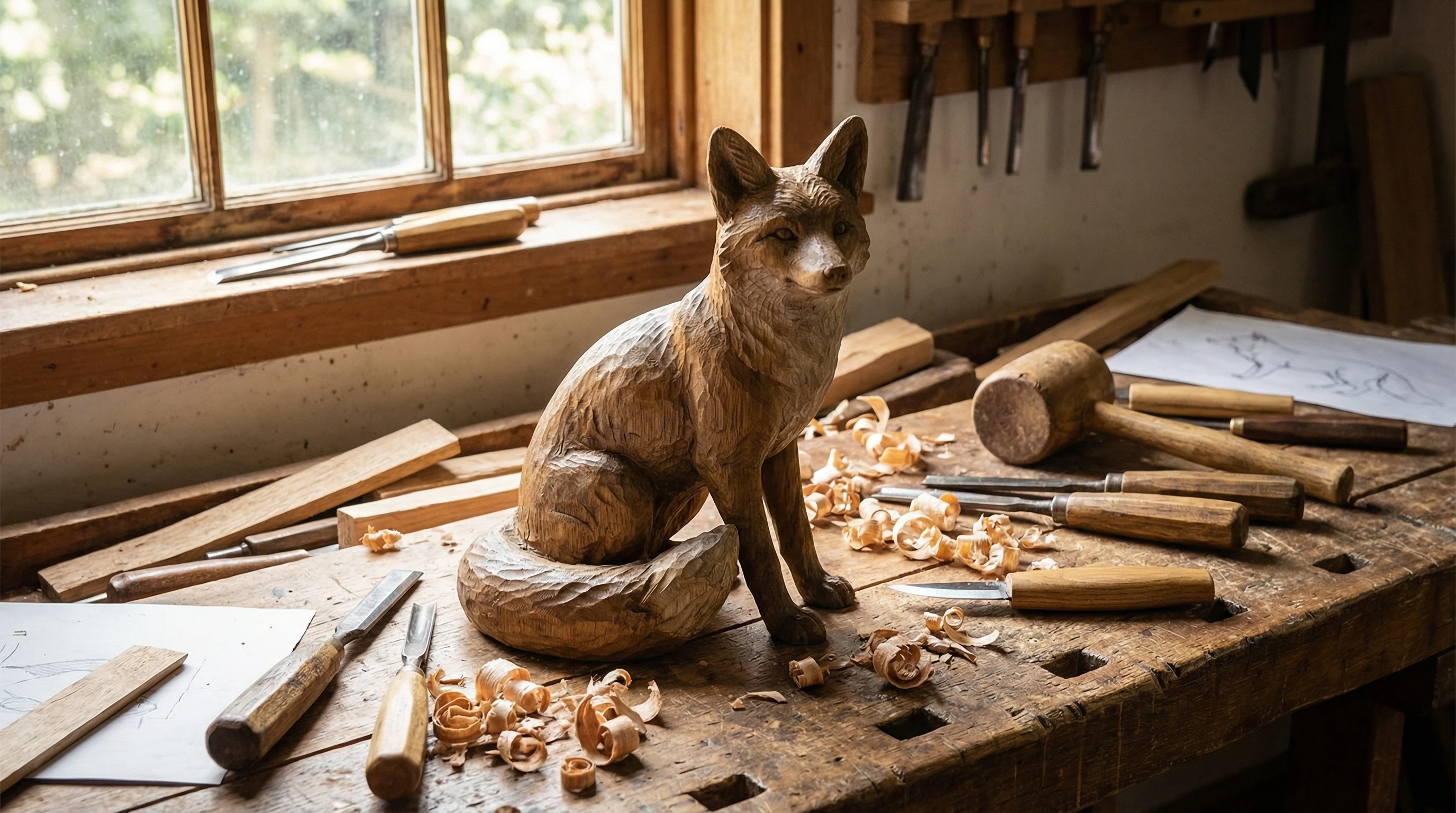
- Carving in the round: Shaping the wood fully on all sides, just like a sculpture. Animal figures, statues, and even some toys are made this way.
Challenges and Rewards of Wood Carving
Working with wood isn’t always a smooth ride. The type of wood makes a huge difference: some woods are soft and easy to carve, while others are super hard and will dull your blade quickly. Some popular carving woods include basswood, walnut, butternut, and oak. Each has its own feel and unique properties that can affect the final piece.
Another challenge is planning your work. Unlike clay, if you carve away too much, there’s no turning back. That’s why experienced wood carvers take their time, planning each stage and progressing slowly. Sharp tools, patience, and sometimes months or even years of effort go into a single piece. Finishing could mean sanding, staining, or painting to make all the details pop and help the carving last for generations.
Despite these challenges, many carvers find the process therapeutic. When I get into a carving time has a tendency to simply melt away. It’s a hands-on, creative way to make something special and personal. Plus, you learn a lot about the properties of different woods and develop a set of skills that’s becoming rare today. Carving helps people find a sense of focus, patience, and connection with the material.
Modern Wood Carving: Where Tradition Meets New Ideas
Today, wood carving covers everything from folk art and souvenirs to museum-quality masterpieces. Power tools, rotary cutters, and materials like wood stabilizers help carvers try exciting styles and create larger pieces, but lots of artists still use hand tools to keep things traditional. The beauty of wood carving today is the blend of new and old methods, inspiring both beginners and experts to explore what’s possible in wood.
Wood carving remains central in lots of cultures, such as Native American totem poles in the Pacific Northwest or decorated dragons and houses in Bali. Major companies and theme parks rely on carvers to produce everything from set pieces to props. The craft still blends well with newer styles, such as abstract art and mixed media installations, proving that wood carving evolves with every new idea.
Online, you’ll find a strong community. Forums and social media groups let folks share photos, swap advice, and even set up group projects. Many carvers teach classes, post videos, or write books for those wanting to learn. It’s pretty easy to get started, and you definitely don’t need to buy expensive tools or wood to start having some fun. Lots of people begin with scrap wood and a simple knife, gaining confidence along the way.
Practical Uses and Inspiration for Wood Carvers
Wood carving is more than just a hobby—it shows up everywhere! Decorative spoons, bowls, and utensils all begin as rough pieces of wood shaped by hand. Plenty of people enjoy making personalized gifts like jewelry boxes or carved signs for friends and family, turning a chunk of wood into something with real meaning.
- Home Decor: Handmade carved panels, figures, or bowls add a warm, personal vibe to any space.
- Religious or Cultural Art: Carved objects still hold a special place in ceremonies, rites, and spiritual spaces.
- Creative Expression: Many artists use wood as their main medium, entering carvings in fairs or displaying them at galleries and art shows.
I’ve personally found inspiration browsing through craft books, taking in person classes, checking out art shows and watching youtube videos. Every piece has its own story, showing the unique creativity of the carver and the character of the wood itself. If you’re ever stuck for ideas, just check out old carvings in your local museum or photos online—you’ll be amazed how much is possible with a simple block of wood.
Wood carving continues to attract new artists because it’s a craft where you can see improvement quickly, and even simple projects are satisfying. Community groups often welcome new members, and there are plenty of exhibitions and fairs where you can show off or just admire other people’s work. Whether you want to make functional objects, try your hand at sculpture, or add a personal touch to your home, wood carving offers endless possibilities.
Wrapping Up
The story of wood carving is all about human creativity, patience, and tradition—a ride that’s still going strong. Whether you’re interested in carving yourself or just want to appreciate the skill behind these objects, there’s a ton to learn and enjoy from this timeless craft. With some practice and a careful eye, anyone can jump in and find both relaxation and pride from working with wood. Wood carving isn’t just history—it’s a living art form that keeps growing, rewarding anyone who wants to give it a try.
Feel free to leave any questions or thoughts you might have in the comment section and thank you for reading!
Fascinating article James! As a retiree I’m always interested in finding new hobbies. A gift card to a local wood carving class would be a great gift for some retired friends! Thanks for sharing your knowledge and enthusiasm for wood carving!